
I was invited to give a talk at this year’s Confluence event organised by BytetheBook. I’ve always heard good things about Confluence and the broad range of interesting topics discussed. I wasn’t disappointed. Presentations ranged from the future of audio publishing, examples of both ‘good’ and ‘bad’ AI and how to make your own surfboard. See https://bytethebook.com/report-byte-confluence-2020/ for a summary report of the day.
My contribution was to summarise my thinking about ‘the internet plants’ – something I’ve been harping on about for quite a while on this blog and elsewhere. It was lovely to be able to attempt some kind of roundup of where my ramblings have taken me over the years.
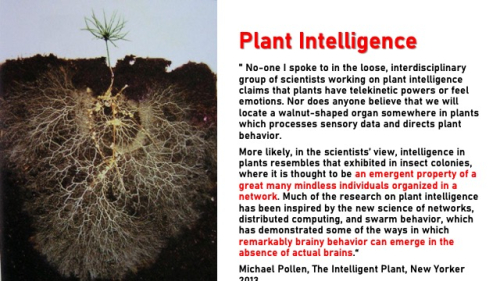
What I hadn’t quite appreciated was how much of my time at StoryFutures Academy has been influencing my thoughts about future relationships between people and plants, storytelling and lived experience, physical and virtual objects and different forms of intelligence (artificial or otherwise).
The Confluence presentation became a musing about how plants might value a successful online/immersive interaction or story. Certainly not as we do, in terms of hits, likes, attention, reach, shares, comments, revenue etc. Plants are motivated by other stuff like growth, propagation, pest control, resource sharing, freedom from predation, control of environments etc.
So the question (for me) is whether a real plant could derive physical benefit from communication with a virtual self and the ‘harvesting’ of human online outputs/stories to generate real-world advantages – such as using online activity (human ‘likes’, ‘views’, ‘replies’ etc) to actuate physical resources such as water, sunlight, minerals, seed transport and so on.

Sounds a bit wiggy I know, but as my presentation shows, I’m not alone in thinking that plants have a lot to teach us about ‘successful’ behaviour, appropriate responses to challenge and what we mean by ‘intelligence’.
Meanwhile in the immersive world, a lot of research is going into how we might live successfully both in the real and the virtual world (or indeed several virtual worlds) simultaneously – and maybe plant intelligence and a plant-based view of what constitutes a successful experience and/or interaction could help us in these new worlds, where new kinds of storytelling techniques are being developed and new stories are to be told.
As usual with my presentations, I end with more questions than answers (and usually a lot of puzzled faces…). But at least I have had a chance to go at this subject one more time and get my thoughts in better order. One day I might actually get the time and space to create a piece of work based on these ideas. For now, the presentation slides are available to anyone who’s interested at https://www.slideshare.net/moongolfer/the-internet-of-plants-249673026.
 Tim Wright Digital Writer & Producer
Leave a comment