
Just returned from a Media In Transition conference at MIT, Boston USA.
The theme was on ‘the work’ that stories do, but the bulk of the papers and presentations focussed helpfully on the question of why some stories and story types last over centuries, migrating across media platforms, adapting and mutating as they go, whilst others just languish in one form or in one era, trapped by technology or fashion or socioeconomics – or just set within a dead or dying culture – Online Caroline, anyone? 😉
The opening session set the tone, highlighting a number of story models, characters and narratives from the past that one might call ‘classic’ in terms of their ability to survive despite changes in media technology, distribution and consumption over the ages.
Awareness of literary traditions was stressed (sometimes to the point of fustiness IMHO…). For example, moderator David Thorburn of MIT: “People who are oblivious to Don Quixote will never tell great stories in the digital realm.”
Thomas Pettitt talked about murdered sweetheart ballads and our collective ‘need’ for femicidal narratives (?!). He showed how these stories started as judicial documents morphed into journalistic stories, became cheaply printed news ballads and then were performed as song. “Stories sold to be sung, and sung to be sold,” he noted. (Note to self – could this be a way of thinking about a mobile narrative of the near future – turning news stories into songs/karaoke?)
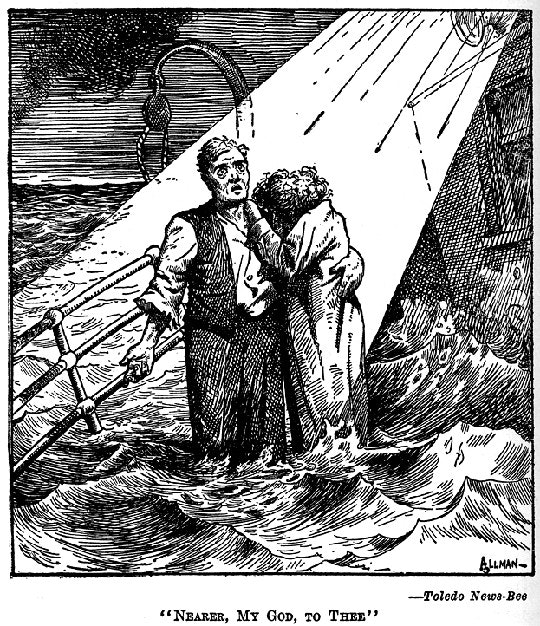
Richard Howells presented a slick run-through all the different ways the Titanic story has been sliced and diced over the years – culminating not just in an overblown James Cameron film, but in weirder and more pervasive forms such as postcards, songs, advertising, tea-towels and even jewellery – a pendant containing coal salvaged from the wreck. (Note to self – think of talismanic wearables as part of interactive narrative.)
Janet Staiger wrapped up the session with a talk on the migration of characters and their ‘motifs’ out of away from their original narrative context. For example, Cinderella never quite escapes her story, since you never get her ‘starring’ in another narrative (although her appearance can be ‘re-themed’ as it were so she can become Goth Cinderella or Porn Cinderella). Sherlock Holmes though can take part in all manner of different stories – as long as his basic motifs don’t go missing: the deerstalker, the spyglass, the pipe…
Much discussion about Superman and Smallville: how and when does Clark Kent manage to live without his key motifs – the flying pose, the logo and the ‘tights and underpants’ look?
Note to self – do ‘interactive narratives need character motifs and story formulas in order to ‘work’?
 Tim Wright Digital Writer & Producer
Leave a comment